
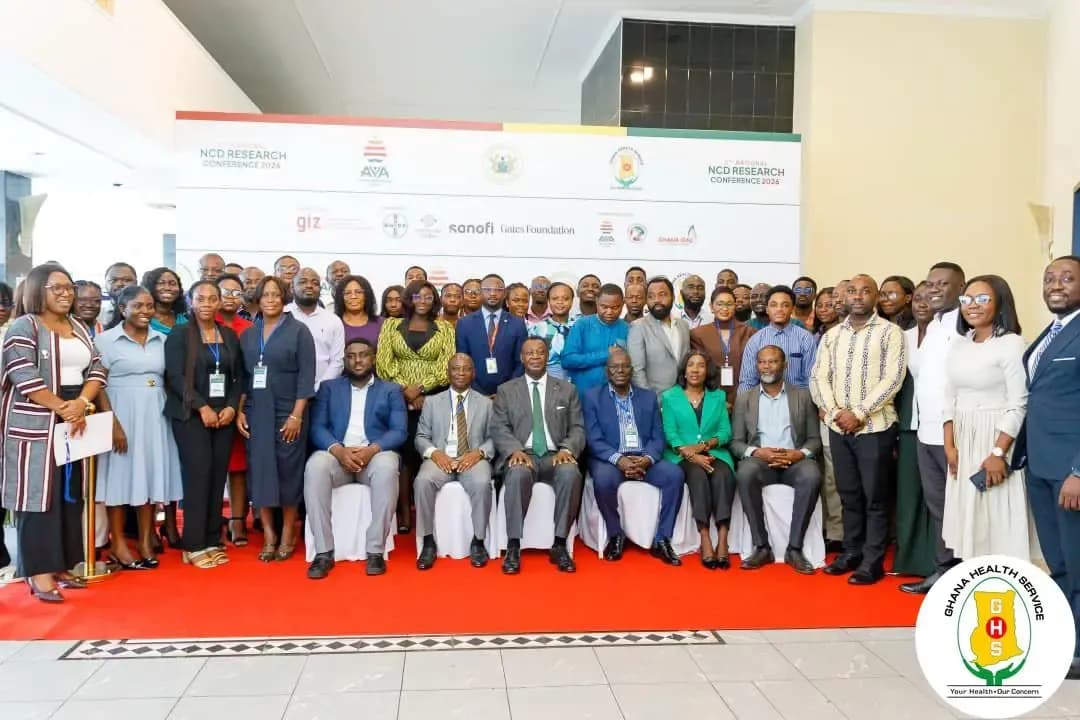
Ghana has intensified calls for a stronger, research-driven national response to the growing burden of Non-Communicable Diseases (NCDs), with stakeholders emphasising the need to translate research findings into practical interventions that strengthen prevention, early detection and treatment.
The call came at the Second National Non-Communicable Diseases Research Conference held at the La Palm Royal Beach Hotel in Accra under the theme “Accelerating Ghana’s NCD Research Agenda Towards Attaining Primary Healthcare Goals.”
The conference assembled policymakers, researchers, development partners and health sector stakeholders to discuss the country's NCD burden and identify evidence-based approaches to prevention and management, particularly within the Primary Health Care (PHC) system.
Chairperson of the conference, Prof. Agyeman Badu Akosa, described the increasing burden of NCDs as a major threat to Ghanaian households and the health sector, observing that NCDs were increasingly affecting families across the country and cautioned that the response to the growing challenge had not been sufficiently urgent.
He therefore called for a fundamental shift in the country's approach to NCD prevention and management, stressing that the situation required more decisive action rather than the relatively inadequate attention currently being given to the diseases.
Welcoming participants to the conference, the Director of Technical Coordination at the Ministry of Health, Dr. Hafez Adam Taher, highlighted the importance of building on the findings and recommendations of the maiden conference held in 2025.
He referenced the country’s restructured health financing arrangements, particularly the Free Primary Healthcare (FPHC) initiative and the Ghana Medical Trust Fund (GMTF), as important mechanisms for improving healthcare delivery, including the prevention and treatment of NCDs.
He further underscored the importance of partnerships in addressing the complex challenges associated with NCDs and expressed confidence that the conference would generate relevant recommendations to inform the development and implementation of practical workplans.
Delivering the keynote address on behalf of the Minister of Health, the Chief Director of the Ministry, Mr. Desmond Boateng emphasised the critical role of research, surveillance and monitoring in shaping effective national responses to NCDs.
He noted that research must extend beyond conventional healthcare settings to examine the environments people live and make everyday health choices, including homes, kitchens, schools and communities.
Mr. Boateng further called for deliberate efforts to bridge existing knowledge and implementation gaps, particularly as the Free Primary Healthcare initiative is rolled out and stressed the need for continuous evaluation to establish its impact, identify areas where the Ghana Medical Trust Fund could deliver the greatest benefits, and ensure that research findings are translated into actionable policy.
The Chief Director, however, noted that research outcomes must be communicated in accessible formats to enable policymakers, healthcare professionals, communities and the public to understand and apply the findings.
Presenting an overview of the NCD situation in Ghana on behalf of the Director-General of the Ghana Health Service (GHS), the Programme Manager for NCDs, Dr. Wallace Ollenu, identified NCDs as a dominant cause of mortality in the country.
Dr. Ollenu outlined the Ghana Health Service's response and expressed optimism that the conference would provide an important platform for examining existing gaps and identifying strategies to curb the rising incidence of NCDs.
He reaffirmed the Service's commitment to strengthening collaboration with the Ghana Medical Trust Fund and other partners to train healthcare providers to improve NCD prevention and management.
Team Lead of the AYA Integrated Healthcare Initiative, Madam Juliette Edzeame, acknowledged the longstanding partnership between GIZ and Ghana, spanning approximately four decades and expressed appreciation to the participating institutions, development partners and other stakeholders for their continued collaboration in strengthening the country's health system.
The two-day National NCD Research Conference was organised by the Ministry of Health and the Ghana Health Service in collaboration with the AYA Integrated Healthcare Initiative. Sponsorship for this year’s conference was from AYA, the Ghana Medical Trust Fund and Ghana National Gas Company. AYA is implemented by GIZ with funding support from Bayer, Panorama Global, Sanofi and the Gates Foundation.